
This post contains affiliate links. If you purchase through these links, I may earn a small commission at no extra cost to you. I only recommend products I’ve personally researched and believe are worth your money.
📱 Watch the Short
Prefer a quick summary? Watch the 30-second version on YouTube.
Two vertical Android handhelds. Nearly identical price tags. One is a battle-tested community favourite with an enviable performance-per-dollar reputation — the other is a brand-new challenger from Anbernic that arrived in late March 2026 with a bigger screen, newer SoC, and some genuinely exciting tricks up its sleeve. If you’re trying to decide between the Anbernic RG VITA Pro ($139.99) and the Retroid Pocket 4 Pro ($149.00), this is the breakdown you need.
Both devices target the same buyer: someone who wants serious PS2, GameCube, and Wii emulation in a pocketable vertical form factor, without spending $200+. But they take very different paths to get there — and the right pick depends heavily on what you prioritise.
Quick Specs at a Glance
| Feature | Anbernic RG VITA Pro | Retroid Pocket 4 Pro |
|---|---|---|
| Price (US) | $139.99 | $149.00 |
| CPU | RK3576 (4×A72 + 4×A53, 2.2GHz) | Dimensity 1100 (4×[email protected] + 4×[email protected]) |
| GPU | Mali-G52 MC3 | Mali-G77 MC9 @ 836MHz |
| RAM | 4 GB | 8 GB LPDDR4x |
| Storage | 64 GB eMCP + dual TF slots (up to 2TB) | 128 GB UFS 3.1 + TF slot |
| Screen | 5.5″ IPS INCELL, 1920×1080 | 4.7″ LCD, 750×1334 |
| OS | Android 14 / Linux 64-bit | Android 13 |
| Battery | 5000 mAh (≈8h) / 18W charging | 5000 mAh / active cooling |
| WiFi / BT | WiFi 6 / Bluetooth 5.2 | WiFi 6 / Bluetooth 5.2 |
| Hall sticks | Yes (large-angle 3D Hall) | Yes (3D Hall) |
| Gyroscope | Yes (6-axis) | Yes |
| USB-C Display Out | Yes (1080p DP, dual-screen NDS/3DS) | No |
Meet the Contestants
Anbernic RG VITA Pro
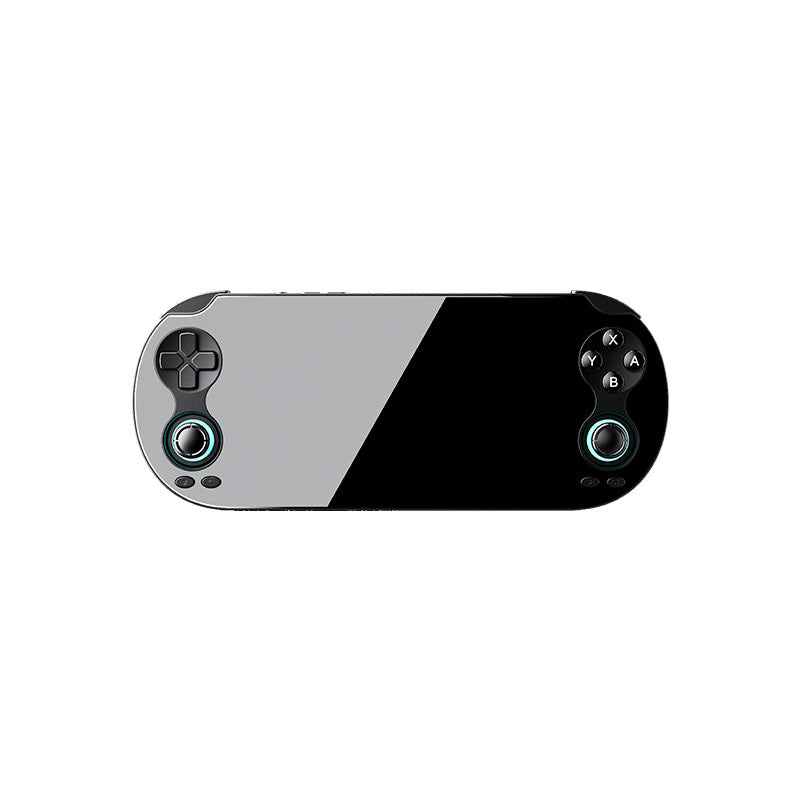
Launched in late March 2026, the RG VITA Pro is Anbernic’s answer to the question: “what if a vertical Android handheld had a phone-grade screen and a freshly current SoC?” The headline spec is that 5.5-inch 1080p IPS INCELL panel — at this price, that’s a genuinely exceptional display, and it’s noticeably larger than anything else in the vertical handheld segment under $150.
Under the hood sits the Rockchip RK3576, an octa-core chip (four A72 performance cores + four A55 efficiency cores) paired with a Mali-G52 MC3 GPU. The RK3576 is a solid mid-range choice from 2025 — the same chip powers a number of Chinese Android tablets. It handles PS1, N64, PSP, and Dreamcast without breaking a sweat. PS2 is a mixed bag: lighter titles like Gran Turismo 3 and Final Fantasy X run well, but demanding games (God of War, Shadow of the Colossus) will push the G52 MC3 to its limits. GameCube emulation via Dolphin is hit-or-miss, landing in similar territory to a Unisoc T618 device.
Where the RG VITA Pro distinguishes itself: Android 14 out of the box (a full two OS generations ahead of the RP4 Pro), a Linux 64-bit dual-boot option, dual TF card slots supporting up to 2TB of expansion, and USB-C DisplayPort output that even handles dual-screen NDS and 3DS mirroring. The on-device AI features — game guide retrieval, real-time translation, text-to-image — are a bit gimmicky, but the dual TF slots and DP output are genuinely useful in day-to-day use.
Retroid Pocket 4 Pro
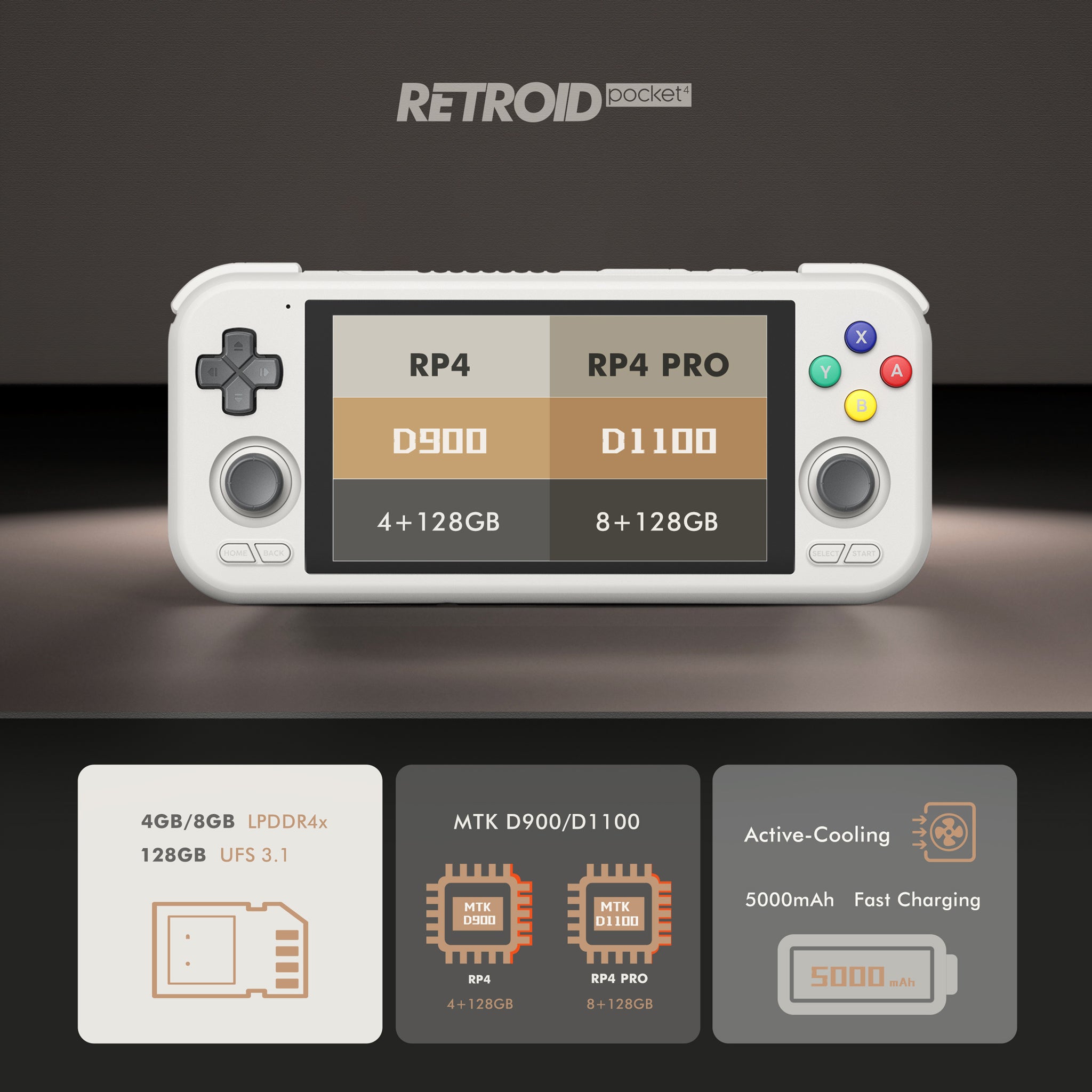
The Retroid Pocket 4 Pro launched in late 2023 and has spent the time since then quietly becoming one of the most trusted vertical retro handhelds ever made. The hardware story is anchored by MediaTek’s Dimensity 1100 — four Cortex-A78 cores at 2.6GHz and a Mali-G77 MC9 GPU. That GPU spec is the headline number here: the G77 MC9 is substantially more powerful than the G52 MC3 in the RG VITA Pro, and in practice you’ll feel that difference in PS2 and GameCube emulation.
The RP4 Pro pairs that chip with 8GB of LPDDR4x RAM and 128GB of UFS 3.1 storage — both specs that make it punching well above its price tag. The active-cooling fan (visible through the clear backplate options available as accessories) keeps sustained gaming sessions stable even under heavy emulation loads. The 4.7-inch 750×1334 LCD is smaller and lower resolution than the RG VITA Pro’s screen, but it’s sharp enough at handheld viewing distances and the smaller panel likely contributes to the excellent battery life this device is known for.
Retroid’s biggest advantage isn’t hardware — it’s software support. The RP4 Pro has an exceptionally active user community on GBATemp and Reddit’s r/SBCGaming, a mature Retroid OS layer, and consistent OTA update support. If you hit a problem, someone has almost certainly already solved it and posted the solution. That track record is worth real money at this price point.
Head-to-Head: Where Each Device Wins
Raw Emulation Performance: RP4 Pro
This one isn’t close. The Mali-G77 MC9 in the RP4 Pro has roughly twice the GPU throughput of the G52 MC3 in the RG VITA Pro. In practical terms:
- PS2: The RP4 Pro handles the vast majority of the PS2 library at full speed with the AetherSX2/NetherSX2 fork. The RG VITA Pro can do many titles but struggles with late-era PS2 games.
- GameCube / Wii: Dolphin performs well on the RP4 Pro — most GameCube games are playable, some require tweaks. On the RG VITA Pro, you’ll hit walls with more demanding titles.
- PSP: Both run PSP without issues. PPSSPP is lightweight enough that neither chip is stressed.
- Nintendo DS / 3DS: Both handle DS fine. 3DS is the more interesting case: the RP4 Pro’s extra GPU headroom means fewer titles require underclocking hacks in Citra/Lime3DS.
If your primary goal is PS2 and GameCube emulation, the RP4 Pro wins decisively — its extra $9 is more than justified by the GPU and RAM advantage.
Screen: RG VITA Pro
The 5.5-inch 1080p IPS INCELL display on the RG VITA Pro is the most impressive screen in a sub-$150 retro handheld. Full stop. It’s bright, sharp, and the extra real estate makes GBA, SNES, and handheld system content feel luxurious rather than cramped. The RP4 Pro’s 4.7-inch 750×1334 panel is fine — it’s punchy and responsive — but at handheld viewing distances you can see the pixel density difference, especially in game UI text.
If you primarily play older systems where raw GPU horsepower doesn’t matter (GBA, SNES, NES, GBC, GBA, PS1), the RG VITA Pro’s screen will genuinely improve your daily experience.
Storage Flexibility: RG VITA Pro
Dual TF card slots are a quality-of-life feature that collectors immediately understand. You can dedicate one card to your BIOS files, save states, and system config, and use the second for game ROMs — swap the ROM card without disrupting your setup. The RP4 Pro’s single TF slot works fine, but the dual-slot setup on the RG VITA Pro is a legitimate advantage for serious collectors managing large libraries.
Software Ecosystem & Community Support: RP4 Pro
The RG VITA Pro runs Android 14 and has Linux as an option — on paper, those are compelling features. In practice, custom firmware is what matters in the retro gaming space. The RP4 Pro has over two years of community development behind it. EmuDeck, Daijishō, and ArkOS-style configurations are well-documented. Custom firmware threads on GBATemp run thousands of posts deep. The RG VITA Pro is brand new — the community knowledge base doesn’t exist yet, and early firmware often ships with quirks that take months to resolve.
This is a temporary advantage that the RG VITA Pro will close over time. But right now, in April 2026, the RP4 Pro is the safer purchase if you want a device that Just Works out of the box.
Display Output & Versatility: RG VITA Pro
USB-C DisplayPort output that supports dual-screen NDS/3DS is a legitimately useful feature for dedicated fans of those systems. Nintendo DS in dual-screen mode on two connected monitors is a genuinely different experience than top-screen-only emulation. The RP4 Pro doesn’t offer this. If you’re a heavy DS/3DS player, this alone might tip the balance for you.
Which One Should You Buy?
Here’s the honest breakdown:
Buy the Retroid Pocket 4 Pro if:
- PS2 and GameCube emulation is important to you
- You want a device with mature, well-tested firmware and a deep community knowledge base
- You’re comfortable with a smaller screen in exchange for better raw performance
- You want 8GB RAM for Android gaming and multitasking
Buy the Anbernic RG VITA Pro if:
- Screen size and quality is your top priority
- You primarily play up to PS1/N64/PSP and don’t need to push PS2/GCN hard
- You want dual TF card slots for large ROM collections
- USB-C DisplayPort output or dual-screen DS/3DS emulation interests you
- You want Android 14 and a Linux option out of the box
There’s a version of this decision where the RG VITA Pro makes a lot of sense: a collector who wants the best possible screen for playing Game Boy Advance, Super Nintendo, and PS1 games in a large vertical form factor. But the RP4 Pro’s GPU advantage — specifically for PS2 and GameCube — is substantial enough that performance-focused buyers should lean Retroid.
One final note: the Retroid Pocket 6 is currently in second-batch pre-orders at $244–$279. If you’re willing to wait and stretch budget, that’s a significant generational leap. But for buyers who want a device in hand right now under $150, both of these are excellent choices — the RP4 Pro just edges out as the overall recommendation for most buyers.

Leave a Reply